The 164-Hour Church™ • Edition 05 • September 2026
Before You Build Another Program, Have You Looked Around?
Another program is not always the answer. How churches can map the community, partner with trusted organizations, and avoid duplicating work that is already being done.
By DrFaye Wilson
When leaders recognize a community need, the instinct is often to create a new program. The desire to help may be sincere, but addition is not always strategy. Another program can consume people, space, money, and attention before the church understands who is already serving, what is missing, and where partnership could produce greater impact.
The First Question
The first question is not, “What can we start?” The wiser question is, “Who is already doing credible work, and how might we strengthen the assignment together?”
Look Around
A church may see food insecurity and immediately plan a pantry. It may see students falling behind and begin designing a tutoring program. It may see families in crisis and attempt to create counseling, transportation, workforce, or housing services from the ground up.
Yet a trusted organization may already be doing the work nearby. The real gap may not be another provider. It may be volunteers, meeting space, transportation, referrals, technology, communication, or access to people the existing provider has not been able to reach.
Partnership begins with humility. It acknowledges that God may have placed different parts of the solution in different hands. One organization may understand the need. Another may have trained staff. The church may hold trusted relationships, facilities, volunteers, or spiritual care.
Every community need does not require a new church program. Some require a trustworthy church partner.
Duplication Drains Capacity
Duplication happens when organizations serve the same people in similar ways without coordination. It can create competition for volunteers, donors, facilities, attention, and trust while leaving other needs untouched.
A ministry can remain busy and still add very little new capacity to the community. Leaders may spend months creating policies, recruiting people, buying supplies, and learning an unfamiliar service that an experienced partner is already equipped to provide.
This does not mean every church should merge its work with another organization. It means leaders should investigate before they initiate. A clear community scan can reveal what already exists, where the real gaps are, and which contribution the church is uniquely equipped to make.
Map the Community Before Choosing the Program
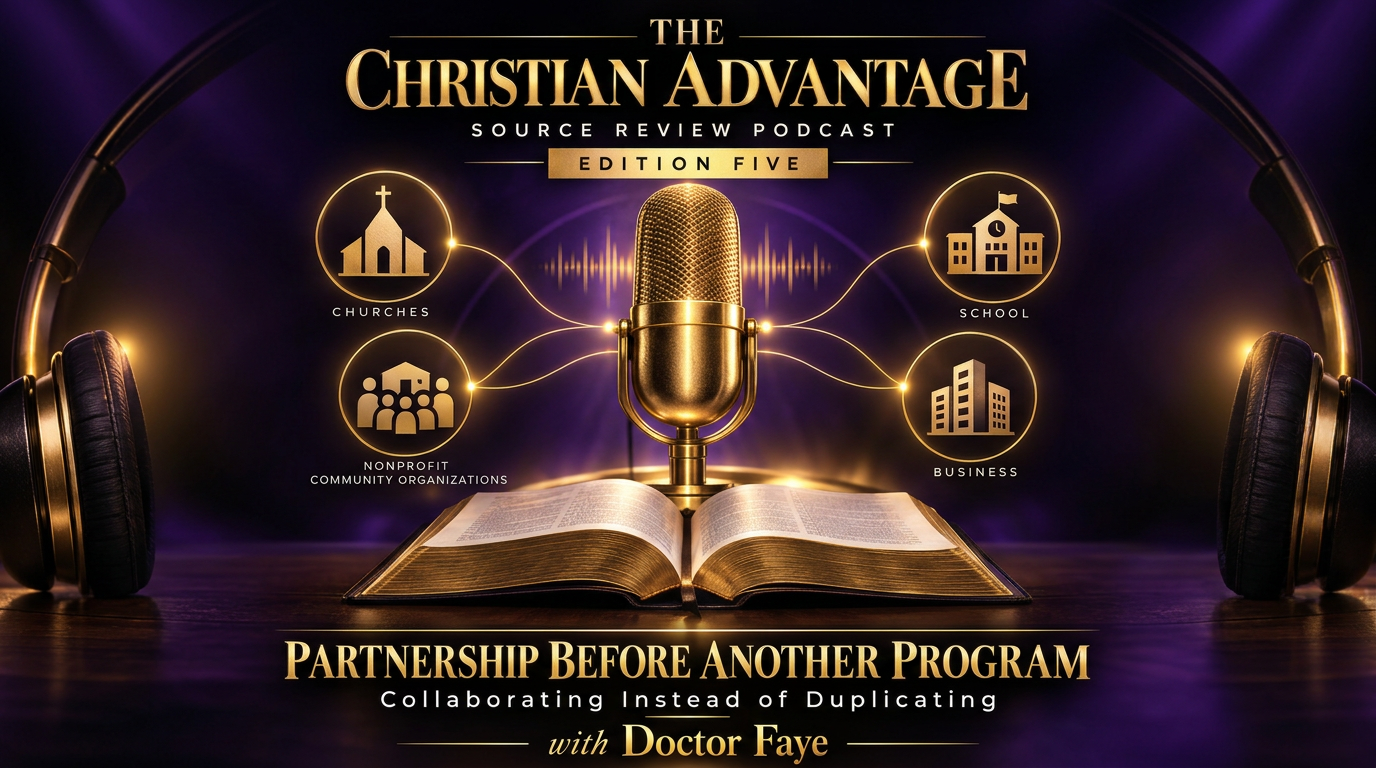
A useful partnership conversation begins with a map of the people and institutions already connected to the need.
| Sector | What they bring to a partnership |
|---|---|
| CHURCHES | Congregations with complementary ministries, facilities, volunteers, language access, or neighborhood trust. |
| NONPROFITS | Organizations with trained staff, established services, outcome data, and specialized expertise. |
| SCHOOLS | Educators and administrators who understand students, families, attendance patterns, and learning gaps. |
| BUSINESSES | Employers that can offer knowledge, equipment, mentors, internships, sponsorships, and workforce pathways. |
| HEALTH PROVIDERS | Clinics, hospitals, counselors, and public-health teams with professional safeguards and referral systems. |
| CIVIC AGENCIES | Libraries, municipalities, extension offices, emergency services, and regional organizations with public resources. |
The Goal
The goal is not to collect partners. The goal is to align the right capacity around a clearly understood need.
Choose Partners With Discernment
Shared concern is not enough. A partnership becomes credible when there is alignment in purpose, conduct, expectations, and responsibility. Before making public promises, leaders should ask five questions.
- 01
Need
Do we share a clear, evidence-informed understanding of the people and problem we intend to serve?
- 02
Alignment
Are our mission, values, methods, and standards compatible enough to work together responsibly?
- 03
Contribution
What will each partner contribute, and is the contribution meaningful, realistic, and sustainable?
- 04
Trust
Does each organization have the credibility, safeguards, leadership, and follow-through the work requires?
- 05
Outcomes
What should change because of the partnership, and how will we know whether it is working?
Not every relationship should become a partnership. Some organizations may be appropriate referral resources. Others may be information-sharing contacts. A formal collaboration should be reserved for work that has sufficient trust, clarity, and shared responsibility.
Document the Agreement
Good intentions cannot carry the weight of unclear expectations. Even a small collaboration should document the basic agreement in language every participating leader can understand.
| Agreement | Question to answer |
|---|---|
| PURPOSE | What need are we addressing, for whom, and why are we working together? |
| ROLES | What is each partner responsible for providing, managing, approving, and communicating? |
| RESOURCES | Who contributes people, facilities, transportation, technology, supplies, or money? |
| SAFEGUARDS | Which policies govern children, vulnerable adults, privacy, safety, insurance, and professional services? |
| INFORMATION | What information may be collected or shared, who owns it, and how will it be protected? |
| REVIEW | When will progress be reviewed, concerns corrected, the work renewed, or the partnership concluded? |
Start Small, Learn, Then Expand
A partnership does not have to begin with a major launch. Trust is often built through a focused pilot: one workshop, one referral pathway, one shared facility day, one transportation solution, or one short-term response to a clearly defined need.
A small beginning allows leaders to observe communication, reliability, participation, safety, decision-making, and results before expanding the work.
- 01
Begin with one need
Avoid combining several community problems into one undefined collaboration.
- 02
Choose one shared outcome
Name the change both partners are prepared to pursue and measure.
- 03
Assign one leader from each organization
Give the partnership identifiable people who can communicate and make decisions.
- 04
Set a review date
Decide in advance when the partners will evaluate what worked, what did not, and what comes next.
- 05
Document the learning
Keep the agreements, participation, outcomes, stories, challenges, and improvements that establish credibility.
Partnership Is Not a Shortcut Around Fundability
Funders and community stakeholders often look for evidence that organizations understand the local landscape, avoid unnecessary duplication, use resources wisely, and can work across institutional boundaries. A credible partnership can demonstrate broader reach, stronger referral networks, specialized expertise, shared assets, and community trust.
Partnership is not a shortcut around fundability. Each organization must still be responsible for its leadership, finances, policies, outcomes, and promises. Collaboration strengthens capacity only when the partners themselves are prepared to carry the work.
The Christian Advantage™ Takeaway
Before creating another program, discover whether the greater Kingdom strategy is to connect what God has already placed in the community.
Begin the Partnership Conversation
Gather your leadership team this week and take four simple steps.
- Map one need. Name a specific community need your church is burdened to address.
- Identify three credible organizations already serving that need with trust and capacity.
- Schedule one listening conversation before proposing another program.
- Choose partners with discernment — do not confuse access with alignment, enthusiasm with readiness, or a conversation with a commitment.
About DrFaye
DrFaye is Chief Fundability Officer of The Fundability Institute™, host of Around Town with DrFaye and Faith Alive in 5. Contact: TheFundabilityInstitute.com | AroundTown.DrFaye.com | FaithAlivein5.com | compliance@drfaye.com